Find Now · Device-finding guide
Find Lost Bluetooth Headphones in a Shared Study Room
Before everyone packs up, describe your headphones and agree who will check each area. Start with your last-use seat and your own belongings, then divide the shared surfaces and walking route into named zones. Ask other people to check their own bags. Keep nearby Bluetooth names separate from ownership, and leave any unrecognized item unresolved rather than claiming it.

Published by Clara · Publisher
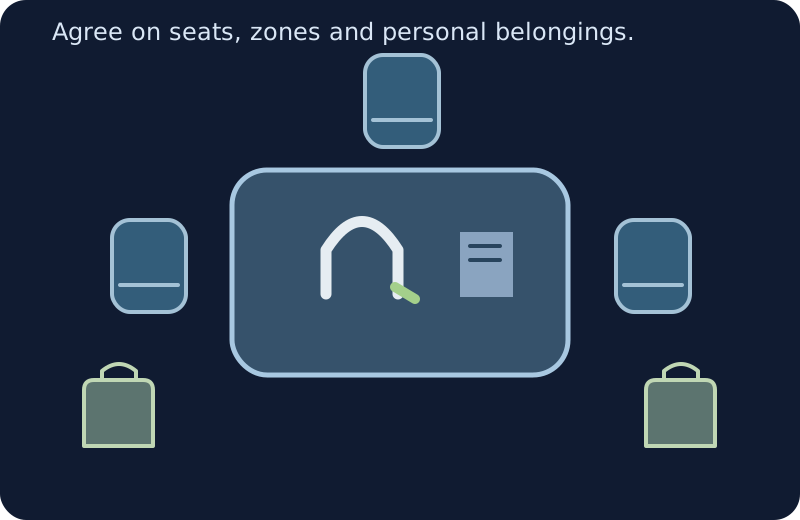
A shared study room needs a coordinated search, not several people emptying the same backpack or following the strongest unfamiliar signal. One person can record which zones have been checked while others look at the agreed places.
The aim is a physical item that matches your own headphones, or a clear handoff when the room closes. You can complete this process without installing anything or controlling another person’s devices.
Completed example
Worked example: three students packing up in an Austin library
Starting information
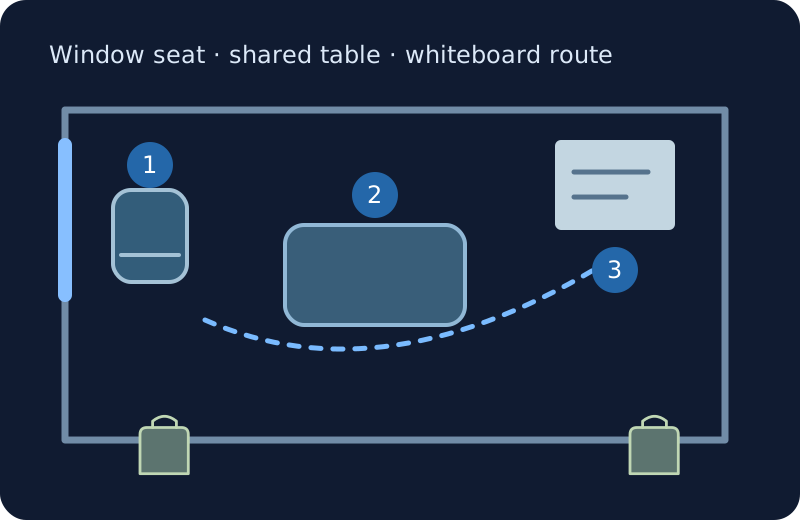
You last used black over-ear headphones with a green fabric tag at the window seat. You then carried a notebook to the whiteboard. Your own backpack is under the window chair. The room has an accessible shared table and a clear whiteboard ledge. Two classmates remain in the room, each with their own bag. A generic nearby observation includes two entries labeled Headphones, but neither is linked to a physical object.
Useful outcome
You check the window seat, your backpack and the floor beneath the chair. With agreement, one classmate checks the shared table and the other checks the whiteboard ledge and the route from your seat. Each classmate checks their own bag. Treat both Headphones entries as unresolved. If you encounter a black headset without your green tag, treat it as a candidate to compare, not permission to take it.
Illustrative group-search plan, not a device scan, owner-verification test or report of recovered headphones.
Keep the room’s clues intact before everyone leaves
Say what you are looking for in concrete terms: over-ear headphones or earbuds, color, case and a distinguishing mark you already know. Add the seat and time you last handled them. Do not invent a serial number or unique mark after seeing somebody else’s item.
Ask for a short pause in packing. If someone needs to leave, ask them to check their own belongings and tell you which shared area they last used. Their departure does not establish that they took the headphones.
Assign zones, not other people’s belongings
- Make one short note with the missing item’s description, last-use seat and the next place you walked. Choose one person to keep the checked-zone list so every result goes into the same record.
- Check your own clothes and bag first. Put your own bag on a clear surface, inspect each pocket and its lining, then mark it checked. Ask classmates to inspect their own bags; do not open or move them yourself.
- Assign different accessible shared areas by agreement. One person checks the last-use seat and floor, another the shared table, and another the next surface on your route. Move only light shared objects you have permission to move; leave heavy furniture in place.
- Record each zone as checked, not yet checked or item found. Describe any candidate where it lies before anybody picks it up. A searcher finding a headset is a new clue, not proof that it belongs to the person who asked.
- Compare a candidate with the description supplied before the search. If the known details conflict, leave ownership unresolved and ask the room’s users or library staff. Do not pair, reset or rename unfamiliar equipment to test a guess.
- If the headphones are still missing, leave a precise report with library staff or the venue’s lost-and-found: item description, last-use seat, time and a way to contact you through that venue’s normal process. Keep your checked-zone note for a later visit.
Separate personal bags from shared search areas
The drawing gives the group three shared places to cover without making everyone repeat the same seat check. Personal bags stay beside their owners; an assigned floor zone never grants permission to search someone else’s property.
Two entries called Headphones do not identify yours
Apple’s peripheral-name documentation makes the name optional. A familiar-looking label is therefore only a clue about an observation, not an ownership record.
Keep the physical search moving while identity remains uncertain. In the example, neither Headphones entry changes the order: the window seat and the route to the whiteboard are supported by your last-use information. If you later have a plausible device candidate, use the separate identification guide before following its signal.
A candidate needs comparison before collection
Write “black headset on table, green tag not seen” rather than “my headphones found.” That wording preserves what you actually know. A matching color is less specific than the green tag supplied in the example, and an unseen tag may need a closer look rather than an immediate conclusion.
Ask the person who recognizes the candidate or the venue’s staff to resolve uncertainty. Do not publish someone else’s device identifiers or treat a routine nearby entry as evidence of wrongdoing. If no one can establish ownership, follow the venue’s found-property process.
Where Find Now fits in a shared-room search
For your own detectable nearby target, Find Now’s listing offers a relevant next step: Bluetooth finding with signal-strength feedback. It can support the local search stage after you have a credible connection between the target and your missing equipment.
Keep the group’s zone notes alongside that clue. Strength does not determine who owns an object, authorize searching another person’s bag or guarantee the headphones will be recovered.
Questions that come up next
Should everyone search all the bags?
No. Each person checks their own bag or explicitly controls who may help. Divide shared seats, surfaces and floor areas separately so a coordinated search does not become an uninvited search of belongings.
What if someone has already left?
Record the areas they used, ask them through an existing appropriate contact to check their own belongings, and continue the accessible room search. Leaving the room is not evidence that they took the headphones.
Does a nearby entry with my usual headphone name prove it is mine?
No. Keep the label as a clue until it has a credible physical connection to your own equipment. Use the separate identification guide rather than taking or pairing an unfamiliar object.
What if the room closes before the search is complete?
Tell staff which zones remain unchecked and leave a description, last-use seat and time through the venue’s lost-and-found process. Do not mark unchecked zones clear just because you have to leave.
What changes when the headphones are physically found?
Compare the candidate with details you already knew. Once ownership is resolved, mark the physical item found and end that part of the search. An empty or inconsistent observation list does not undo a confirmed physical find.
For your next nearby search
Keep your own target separate from nearby devices
Once you have a credible target for your own missing headphones, consider Find Now’s Bluetooth signal-strength feedback for a nearby search. Keep the shared-room checklist; a device name or strong signal alone does not establish ownership.
Explore Find Now