Translate Us Translation Trends
How AI translation is changing industries
Short answer: AI translation can support a first reading, a draft, or a short everyday exchange in work and travel. The useful boundary is who checks terminology, obligations, and the final action.
See how AI translation changes customer support, travel, education, commerce, and professional workflows while keeping human review in the loop.

Published by Clara Publisher
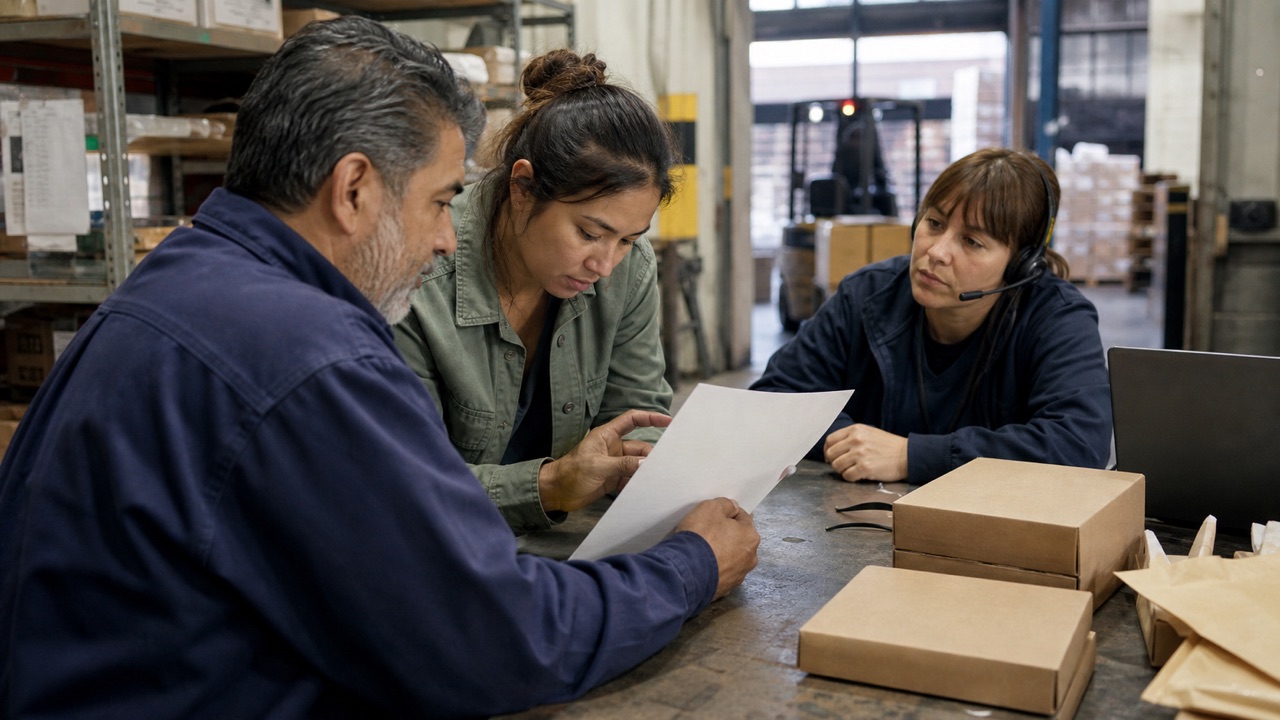
AI translation can change where a first translation happens: a support agent can read a customer question, a guest can ask about a reservation, and a learner can check a short passage. These are possible workflows, not evidence that a business has reduced costs or improved outcomes.
The impact differs by sector. A traveler asking for directions has a different tolerance for error than a hospital, court, school, or product team. The useful question is not whether AI replaces translators; it is which part of a language workflow it can support safely.
Spanish → English · Illustrative workflow
A message you can read before sending
Translate the whole sentence first. Use the surrounding conversation to check the meaning.
-
Bring the original message
Spanish input
¿Te viene bien mañana a las dos?
-
Read the natural English wording
English translation
Does tomorrow at two work for you?
-
Confirm the detail, then reply
The original does not say a.m. or p.m. Confirm the time before copying the wording into your conversation.
Customer support and commerce
A support agent can use translation to get a first understanding of an incoming question or draft a reply for review. A commerce team can use it to explore a phrase before commissioning final local copy. Whether this saves time depends on the source, language pair, correction work, and the organization’s approved process.
Terminology needs special care. Product names, returns rules, measurements, delivery dates, and safety instructions should stay consistent. A fast translation that changes one of those details can create more work than it saves.
- Use a consistent glossary for product and policy terms.
- Keep the source beside the draft during review.
- Route complaints, legal language, and safety issues to trained staff.
- Test short, informal messages as well as polished questions.
- Track corrections so repeated errors become visible.
Example
- Illustrative source
- Your replacement order will leave on Monday. Delivery may take three days.
- Review task
- Keep “will leave” separate from “may take.” A translation that turns the delivery estimate into a guarantee changes the promise.
- Useful action
- Have the person responsible for the customer reply approve the translated promise before sending it.
- Basis
- Example wording, not a captured business result or Translate Us output.
Travel and hospitality
Travelers use translation in motion: reading a sign, asking a question, understanding a message, or handling a reservation. Voice, photo, and camera workflows can reduce the need to type unfamiliar words. Staff can also use translation as a bridge while they find a person who speaks the guest’s language.
The right standard is clarity for the moment. A translated menu item may help someone choose lunch; a translated evacuation instruction needs confirmation and a reliable human channel.
Example
A hotel guest can photograph a notice, ask a short voice question, and type the reservation name for an exact confirmation. Each step uses a different input because the source changes.
Education and access
In education, translation can help a learner understand a first explanation, compare wording, or hear a phrase. It can also make a short message more accessible to a family or community. The tool should support learning and participation without hiding uncertainty or replacing instruction.
Teachers and institutions should define when AI output is acceptable, when a bilingual staff member must review it, and how students should cite or check translated material. A translation app can open a door; it does not remove the need for subject knowledge.
Regulated and high-consequence work
Healthcare, law, finance, immigration, and public safety have a lower tolerance for ambiguous output. AI can assist with triage, draft understanding, or internal preparation, but a qualified human should control the final communication when a mistake could change rights, treatment, consent, money, or safety.
Accuracy also has multiple dimensions. A sentence may preserve the broad topic while losing a condition, deadline, obligation, or cultural implication. Review must check the meaning that matters for the decision, not only grammar.
- Define an approved use case before choosing a tool.
- Keep a human accountable for final high-stakes language.
- Verify terminology, names, dates, and required notices.
- Do not treat fluent output as certification.
- Record the source and review path for important material.
What the change means for an iPhone user
For everyday users, AI translation moves language help into more moments. Translate Us lists text, voice, photo, camera, real-time conversation, translator keyboard, AI dictionary, and 200+ languages on iPhone. That lets a person choose an input mode based on the task instead of treating translation as one typed search.
For a personal first test on iPhone, translate one ordinary service question, such as asking whether a reservation can move to Friday. Use the result to start the exchange, then confirm the actual booking details in writing. Installing a consumer translator does not establish approval for an employer’s confidential or regulated content.
iPhone workflow
Use Translate Us for the moment in front of you
- Open Translate Us on iPhone and choose voice, text, photo, or live camera for the input you have.
- Set the source and target languages, then read or listen to the translation in context.
- Use real-time conversation when two people need to follow the exchange.
- Continue with the translator keyboard for messages or the AI dictionary for a word, meaning, or example.
Sample phrases
Illustrative everyday service phrases
These short source phrases illustrate ordinary translation tasks. They are not business performance evidence, medical or legal templates, or recorded app outputs.
Could I move my reservation to Friday?The replacement will leave on Monday.Delivery may take three days.Could you confirm the product name and order number?
Quick check
Before you translate
- Define whether AI output is a draft, aid, or final public language.
- Protect names, dates, units, terminology, and policy wording.
- Assign a qualified human reviewer for high-consequence use.
- Keep source and translated text together during review.
- Measure correction patterns instead of assuming fluency equals accuracy.
FAQ
Frequently asked questions
How is AI translation changing business?
It can speed up first drafts, support multilingual customer interactions, and make translation available in more everyday workflows. Businesses still need people to review terminology, tone, legal meaning, and safety.
Can AI translation be used in healthcare or legal work?
It may assist with low-risk understanding or preparation, but high-stakes communication should follow the organization’s rules and receive qualified human review. Do not treat a fluent AI output as certified translation.
What does AI translation change for travelers?
It makes it easier to move between text, voice, photos, camera scenes, and live conversations while traveling. Users should still confirm addresses, dates, prices, and safety instructions.
Sources
Useful links
Take it with you
Try Translate Us on iPhone
Translate voice, text, photos, and live camera input across 200+ languages. Use real-time conversation, the translator keyboard, or AI dictionary when the moment changes.
Explore Translate Us