Translate Us Travel Culture
Cultural etiquette for travelers
Short answer: Check the guidance for the specific venue, read posted rules and ask permission before an uncertain action. Country-wide etiquette lists are a starting point, not permission to photograph, enter or touch.
A careful guide to cultural etiquette for travelers that prioritizes destination-specific sources, observation, respectful questions, and honest translation limits.

Published by Clara Publisher
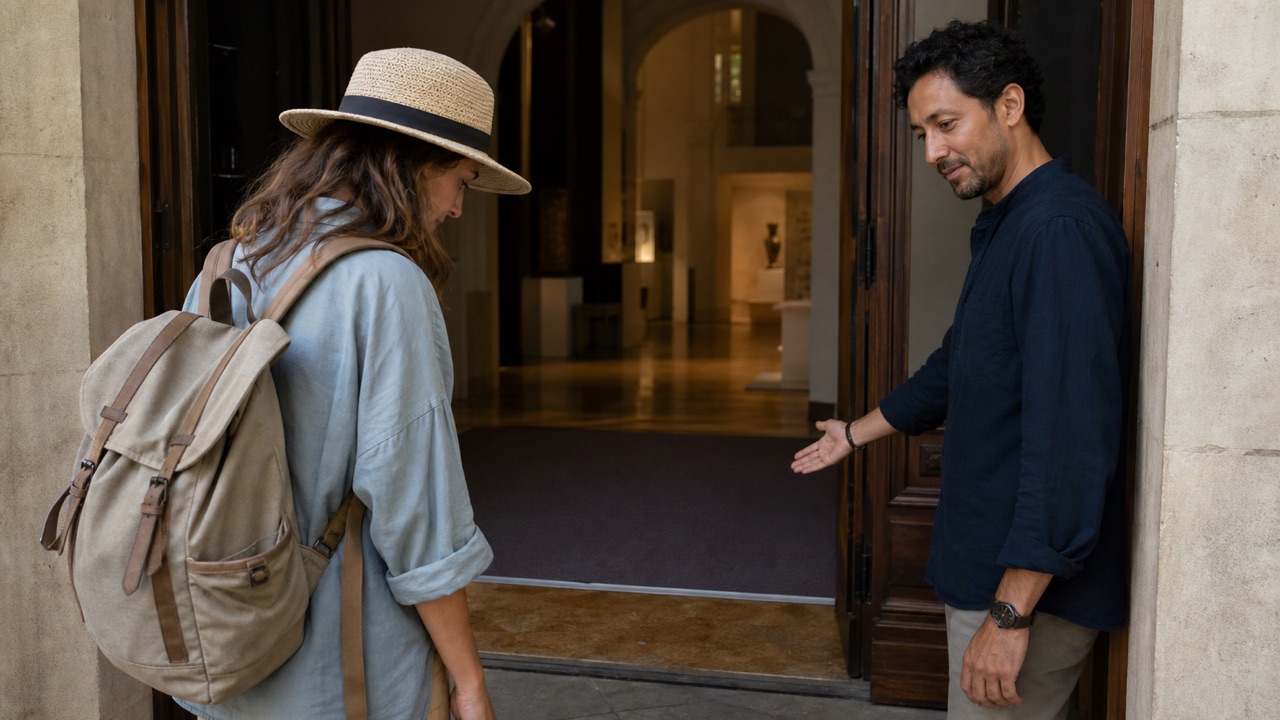
For a temple, home, museum or shared bath, start with that place's visitor instructions. The useful question is often ‘May I do this here?’ rather than ‘What do people in this country always do?’
Use Translate Us on iPhone to translate a written rule or a short permission question. The answer must come from the venue or person involved; the app cannot grant consent.
Spanish → English · Illustrative workflow
A message you can read before sending
Translate the whole sentence first. Use the surrounding conversation to check the meaning.
-
Bring the original message
Spanish input
¿Te viene bien mañana a las dos?
-
Read the natural English wording
English translation
Does tomorrow at two work for you?
-
Confirm the detail, then reply
The original does not say a.m. or p.m. Confirm the time before copying the wording into your conversation.
A specific Japan example: footwear
JNTO notes that some attractions, restaurants and traditional hotels ask visitors to remove their shoes. It advises checking signs and observing the setting. This does not mean every indoor venue follows the same rule.
If you see a shoe area but do not know the boundary, pause there and ask staff. You need the rule for this entrance, not an explanation of every Japanese custom.
Example
Illustrative input: ‘Should I take off my shoes here?’ → Japanese: ‘ここで靴を脱いだほうがいいですか?’ Useful action: wait for staff to show the boundary before entering. Editorial illustration, not an app capture.
Prepare permission questions
A question works better when you identify the action and object. Point to the sign or area rather than to a stranger.
- May I take a photograph here?
- Is this entrance open to visitors?
- Where should I wait?
- Could you show me where to put this?
Read the whole posted instruction
Photograph the heading and the full line. A cropped sentence can omit an exception, time limit or restriction. Compare the result with arrows and symbols on the sign.
For a legal restriction, religious rule or access instruction, ask the responsible staff member if the wording is unclear. Do not infer a penalty or permission from an incomplete translation.
Use translation for the question
Choose your language pair in Translate Us and translate one permission sentence before your visit. You can show text quietly where speaking would disturb others.
Keep the venue's official information with your trip notes. Install the app to try a written rule or permission request, and let the venue's answer decide what you do next.
iPhone workflow
Use Translate Us for the moment in front of you
- Open Translate Us on iPhone and choose voice, text, photo, or live camera for the input you have.
- Set the source and target languages, then read or listen to the translation in context.
- Use real-time conversation when two people need to follow the exchange.
- Continue with the translator keyboard for messages or the AI dictionary for a word, meaning, or example.
Phrases to translate
Short messages to prepare
Choose your source and destination languages in Translate Us, then translate one message at a time. Replace bracketed details before using a phrase.
May I take a photograph here?Should I take off my shoes here?Where should I wait?Could you show me the visitor entrance?
Quick check
Before you translate
- Check the specific venue's guidance.
- Include headings and exceptions in sign photos.
- Ask about the exact action.
- Wait for permission before acting.
- Keep individual consent separate from venue permission.
FAQ
Frequently asked questions
How should I learn etiquette before a trip?
Read current destination and venue guidance, then prepare questions for rules you may need to confirm in person.
Does translating a rule give me permission?
No. Translation helps you read the words. The venue or person responsible must grant any permission you need.
Should I copy what other visitors do?
Observation can help, but other visitors may also be mistaken. Check signs or ask staff when the boundary is unclear.
Sources
Useful links
Take it with you
Try Translate Us on iPhone
Translate voice, text, photos, and live camera input across 200+ languages. Use real-time conversation, the translator keyboard, or AI dictionary when the moment changes.
Explore Translate Us