Translate Us Travel Culture
Greetings to use carefully abroad
Short answer: Choose a greeting for the language, time of day and relationship, then move to your actual request. Keep a neutral opening ready and follow the other person's level of formality.
Prepare a reliable greeting and a short follow-up introduction, with Japanese time-of-day examples and pronunciation limits.

Published by Clara Publisher
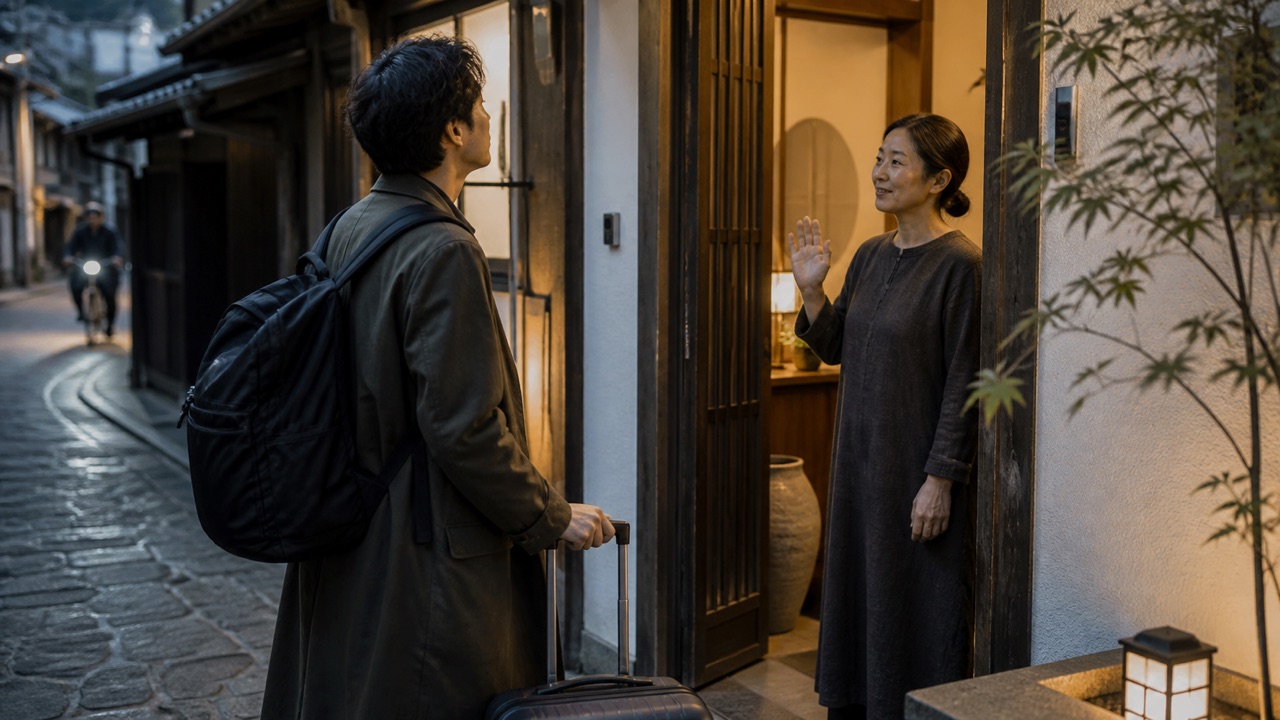
A greeting is the start of an exchange, not a full cultural rule. Learn the spoken form from a reliable language source and pair it with a simple next sentence.
Translate Us on iPhone can translate an introduction and offers phonetics. Use those tools for preparation, then check pronunciation or a sensitive form of address with a speaker who knows the setting.
Spanish → English · Illustrative workflow
A message you can read before sending
Translate the whole sentence first. Use the surrounding conversation to check the meaning.
-
Bring the original message
Spanish input
¿Te viene bien mañana a las dos?
-
Read the natural English wording
English translation
Does tomorrow at two work for you?
-
Confirm the detail, then reply
The original does not say a.m. or p.m. Confirm the time before copying the wording into your conversation.
Japanese greetings by time of day
JNTO's visitor language page lists basic greetings. Use the examples as a small starting set; a specific introduction may need a name, title or other wording.
- Good morning: Ohayo gozaimasu.
- Good afternoon: Konnichiwa.
- Good evening: Konbanwa.
- Excuse me, to get attention: Sumimasen.
Example
Illustrative exchange: begin with ‘Konnichiwa’, then show ‘I have a reservation under [name].’ Useful action: let the staff member respond before giving the dates. This scenario is editorial, not an app test.
Prepare what comes after hello
At a hotel, the next sentence may identify a reservation. At a shop it may ask about a product. At a meeting it may give your name and reason for attending.
Avoid introducing someone by an unfamiliar nickname or assuming a first name is preferred. Use the form of address supplied by the person or organization.
Use a written backup
Translate the full introduction in the chosen language pair. Keep your name and organization in their original spelling so the other person can recognize them.
Practice saying the greeting, but keep the short text version ready. If the reply becomes too long, show ‘I am learning [language]. Could you speak more slowly?’ rather than pretending you understood.
Let the setting guide the greeting
A hotel desk, religious venue and private home may call for different behavior. A translated hello does not establish permission for a handshake, photo or physical contact.
Install Translate Us if you want to prepare the introduction by text or voice. Use official destination guidance and the other person's response to decide what fits the moment.
iPhone workflow
Use Translate Us for the moment in front of you
- Open Translate Us on iPhone and choose voice, text, photo, or live camera for the input you have.
- Set the source and target languages, then read or listen to the translation in context.
- Use real-time conversation when two people need to follow the exchange.
- Continue with the translator keyboard for messages or the AI dictionary for a word, meaning, or example.
Phrases to translate
Short messages to prepare
Choose your source and destination languages in Translate Us, then translate one message at a time. Replace bracketed details before using a phrase.
Hello. My name is [name].I have an appointment with [name] at [time].I am learning [language]. Could you speak more slowly?Thank you for your help.
Quick check
Before you translate
- Choose a reliable greeting for the language.
- Check time of day.
- Keep names in their original spelling.
- Prepare the next sentence.
- Avoid assuming physical contact is welcome.
FAQ
Frequently asked questions
Is one greeting suitable everywhere?
No. Language, time, formality and relationship matter. Use a neutral opening and follow the setting.
What Japanese greetings can a visitor start with?
JNTO lists Ohayo gozaimasu for morning, Konnichiwa for afternoon and Konbanwa for evening, among other visitor expressions.
What if someone replies with a sentence I cannot follow?
Say that you do not understand and ask for slower speech or a written version. A greeting does not require you to pretend fluency.
Sources
Useful links
Take it with you
Try Translate Us on iPhone
Translate voice, text, photos, and live camera input across 200+ languages. Use real-time conversation, the translator keyboard, or AI dictionary when the moment changes.
Explore Translate Us